Why Private Coaching Can Make You a Better Climber
Private coaching can feel expensive—sometimes more intimidating than a deadpoint on the final move of a V5. That cost naturally raises questions: What does a coach provide that you can’t find online? How much faster can you improve? And what makes one-on-one guidance worth the investment?
The answer isn’t just the information shared in a session. A private coach watches how you move, identifies patterns you may not notice, adapts training to your life, and helps you follow through. When the coach and climber are a good fit, that combination can make your training more focused and your progress more consistent.
What Private Coaching Costs—and Why
Let’s address the price first. In the United States, many private coaches—including coaches who work through climbing gyms—are independent contractors. That often means they are responsible for finding clients, managing finances, and setting aside money for taxes. Depending on the arrangement, a coach may set aside around 30% of income for taxes, while a gym may retain 10–20% of a session fee for use of the facility.
As a result, the amount a coach takes home can be much lower than the price you pay. Your session fee covers more than the hour you spend on the wall: it also supports the coach’s planning, expertise, business expenses, and the gym’s operating costs.
Private coaching is a luxury, so it’s reasonable to weigh the cost against your goals. The question is whether personalized feedback and a consistent plan can help you use your training time more effectively. For many climbers, that value can outweigh the price.
What Makes Private Coaching Effective?
A trained outside perspective
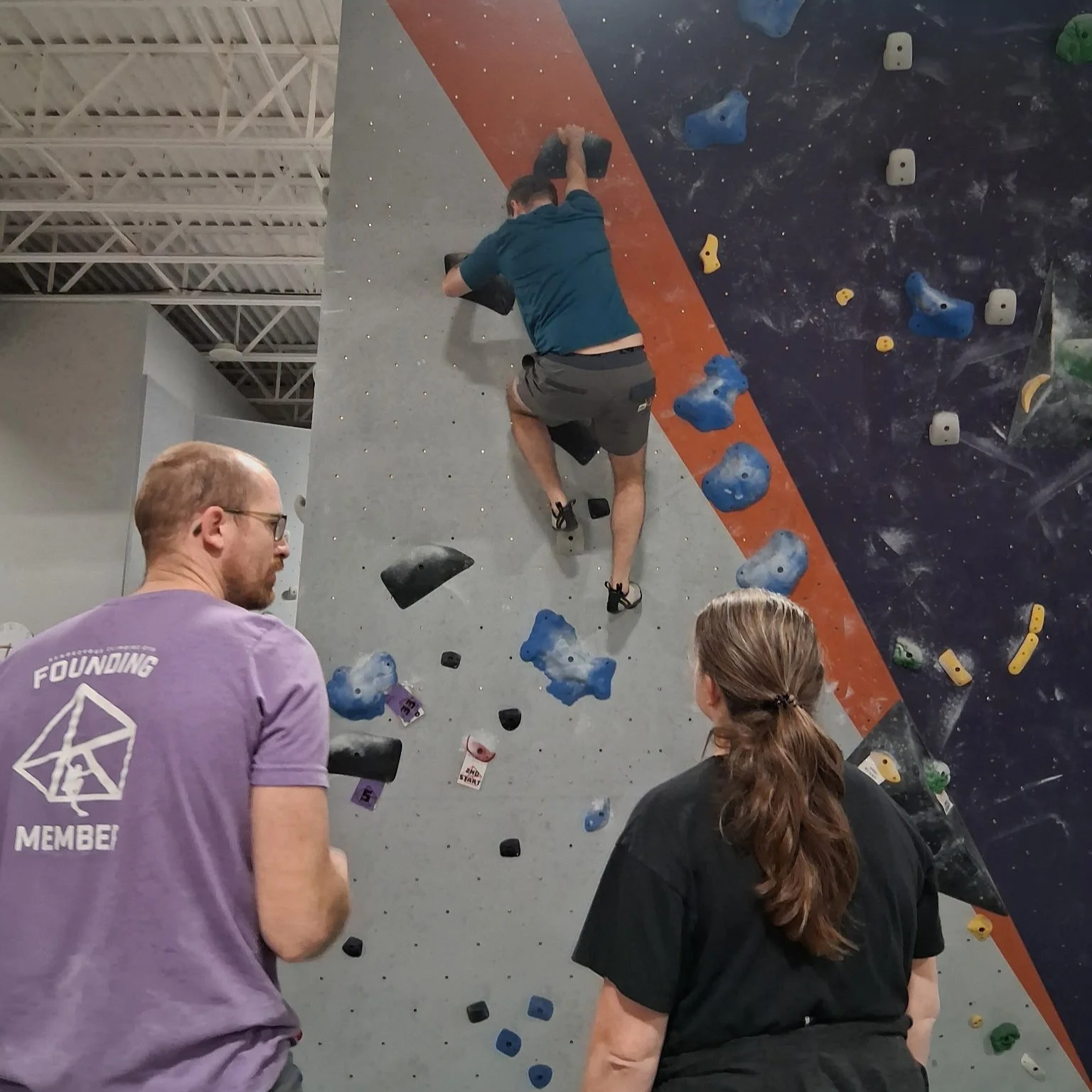
Have you ever climbed with a friend who noticed something about your movement before you did? That is a central part of a private coach’s job. A coach can spot habits that are difficult to feel from inside your own body, then reinforce the techniques that are already working.
This outside perspective also helps you understand your strengths and current limits. Instead of guessing why a move feels difficult, you can work with someone who is watching the attempt and giving you feedback you can apply immediately.
Accountability that fits your life
Coaching is also about showing up. A good coach wants you to get meaningful value from each session, which may include checking in before an appointment, following up afterward, or helping you stay connected to your plan during a busy week.
If you miss workouts or struggle to hit planned training sessions, a coach can help you identify what’s getting in the way. They can adjust the plan for changing schedules, travel, and other responsibilities rather than treating one missed week as failure. And when hesitation or self-doubt is holding you back on the wall, the right coach can encourage you to test your limits safely and intentionally.
Experience you can’t get from a search
You can find a huge amount of climbing advice online. With enough time, you might even find exercises and drills similar to the ones a coach would recommend. The difference is that a coach can apply that knowledge to you.
A private coach can connect your goals, schedule, movement patterns, and training history to create a plan that fits. They can adapt that plan as your priorities change or your body responds differently than expected. The advantage is not a secret piece of information; it is having an experienced guide who knows when and how to use the information.
How Quickly Can You Improve?
There is no universal timeline for improvement. Like learning a language, climbing progress depends on how consistently you practice and how thoughtfully you apply what you learn. You do not need to work with a coach every day, but you do need to stay engaged between sessions.
To get more from private coaching:
Keep a log of your training sessions outside your coaching appointments.
Record the drills, exercises, or movement cues you are trying to apply.
Note how your body responds over time.
Tell your coach what you are noticing, including what feels strong, difficult, or unclear.
This information gives your coach something concrete to work with and makes each session more useful. Private coaching works best as part of an ongoing process—not as the only time you train.
If you ignore your coach’s recommendations, skip most of your independent training, or expect every breakthrough to happen during the appointment itself, progress will be limited. A coach can provide direction and accountability, but your consistency is still the biggest factor in what you achieve.
Is Private Coaching Right for You?
Private coaching may be worth exploring if you want:
Feedback tailored to your movement and climbing goals.
A plan that can adapt to your schedule.
Accountability between sessions.
Help turning general climbing advice into focused practice.
A clearer way to track your progress over time.
Before booking, look for a coach whose experience, communication style, and approach match what you want to accomplish. The best coaching relationship should feel collaborative: you bring your goals and effort, while your coach brings observation, structure, and guidance.
A Valuable Resource
Private coaches can be valuable resources for climbers who want to train with more direction and consistency. They do not replace your effort, but they can help you understand your climbing, target the habits that are holding you back, and make better use of the time you have.
If your gym is promoting private coaching, reach out and start a conversation. Ask about the coach’s approach, share what you want to improve, and see whether you click. With the right fit and a commitment to the process, private coaching can help you move toward your goals—both on the wall and off it.